- Invisible joints between glass panels
- Easy to install
- Say goodbye to uneven joints


Discover Siil,
the brand-new glass
joint from Dextr®.
the brand-new glass
joint from Dextr®.
Our profiles
At Dextr, you will find a wide range of door seals that provide a reliable seal between the door and the frame. They help reduce gaps and protect against draughts, moisture and dirt. Cannot find a suitable solution in our standard range? Feel free to contact us. Together, we will find a door seal that meets your application and technical requirements.
A functional gap is always present between a door leaf and its surrounding frame. This space is required to allow the door to open and close without obstruction, but it can also provide a passage for air, dust, sound or moisture. A door seal, also commonly referred to as a rubber door seal, helps close this opening as effectively as possible.
When the door is closed, the seal is compressed or deformed in a controlled manner. The profile shape, hardness and flexibility determine how much movement the seal can accommodate and how much force is required to close the door.
A profile that is too hard may not deform sufficiently or may require excessive closing force. A profile that is too soft may sit less securely in the mounting groove or deform more significantly under prolonged compression. The sealing profile must therefore be matched to the gap width, mounting groove, closing direction and frequency of use.
A correctly installed door seal helps reduce uncontrolled airflow and can therefore limit discomfort caused by draughts. A suitable draught seal for doors can also help prevent dust, dirt or moisture from easily entering through the gap.
The final performance depends on the entire door construction. The corners, hinges, closing side and connection at the bottom must also be correctly designed and installed. For outdoor applications, rain, UV radiation and temperature fluctuations must also be considered. Specially selected UV- and weather-resistant TPE compounds can be used for these applications.
Gaps around a door can facilitate the transmission of sound. A rubber door seal can contribute to the acoustic performance by closing these air gaps as effectively as possible. To achieve this, the profile must make sufficient contact around the entire perimeter, be compressed evenly and fit correctly in the corners.
However, acoustic performance is determined by the complete door system, including the door leaf, frame, hinges, locking hardware and connection to the floor. When a specific acoustic rating is required, the complete system must be tested accordingly.
The conditions of use help determine which door seal is suitable. For an internal door seal, reducing draughts and sound transmission may be important considerations. The profile must fit the gap properly and compress sufficiently to allow the door to close smoothly.
For an external door seal, weather exposure also plays a role. Rain, UV radiation and temperature variations place additional demands on the material and profile geometry. Specially selected UV-resistant and weather-resistant TPE compounds can be used for these applications. The overall sealing performance depends on the complete door assembly, including the corners and the joint at the bottom of the door.
For both applications, the profile geometry, hardness and fixing method must suit the door leaf, frame and available gap. A seal designed for an internal door is therefore not necessarily suitable for an external door.
Dextr processes, among other materials, TPE for technical profiles and door seals as well as other thermoplastic materials. TPE combines rubber-like behaviour with the processing capabilities of a thermoplastic material.
Depending on the selected compound, the profile can be tailored in terms of hardness, flexibility, elasticity, recovery, colour and resistance to UV radiation, weather conditions, temperatures or certain chemicals. Not every TPE grade automatically provides the same properties. The compound must therefore be selected according to the conditions in which it will be used.
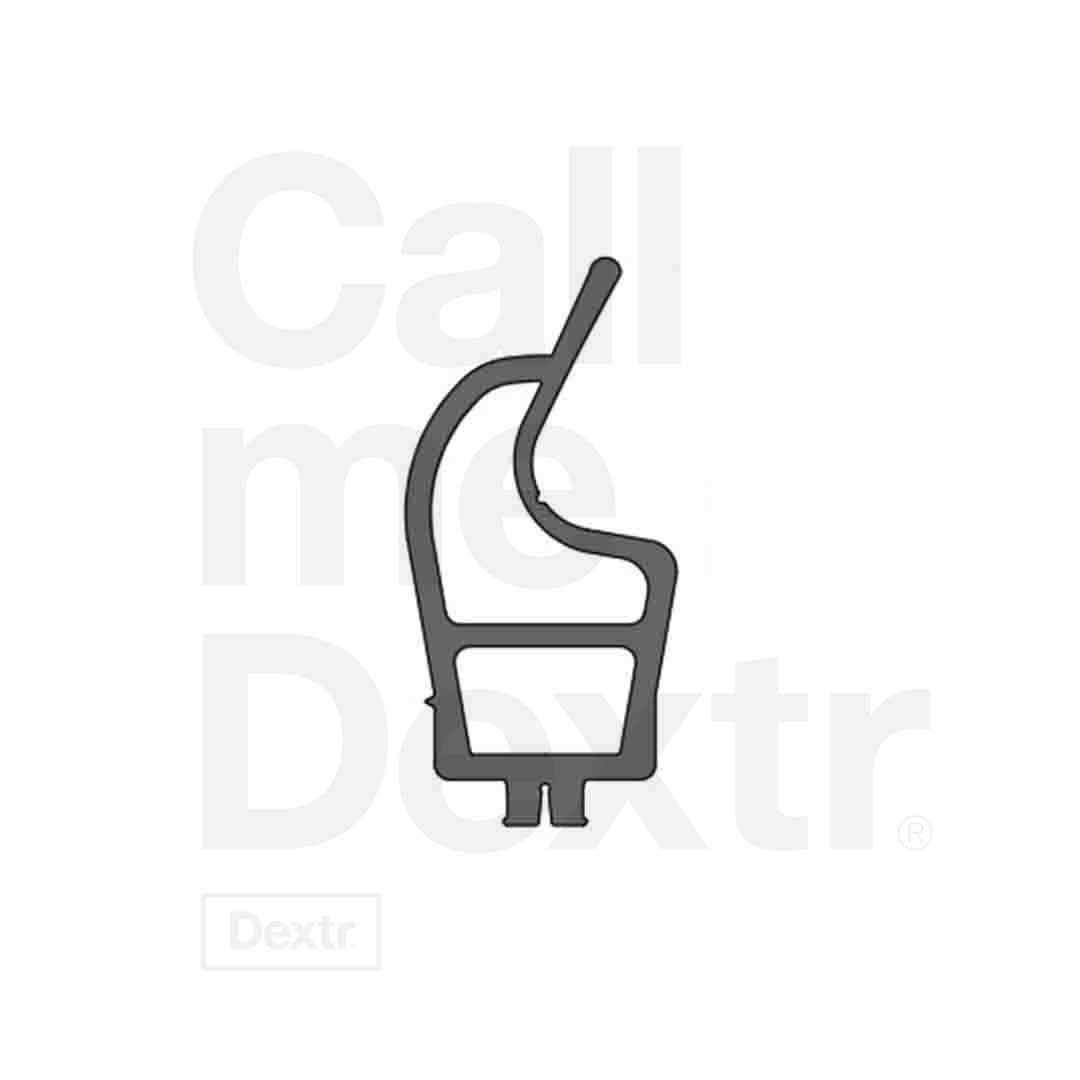
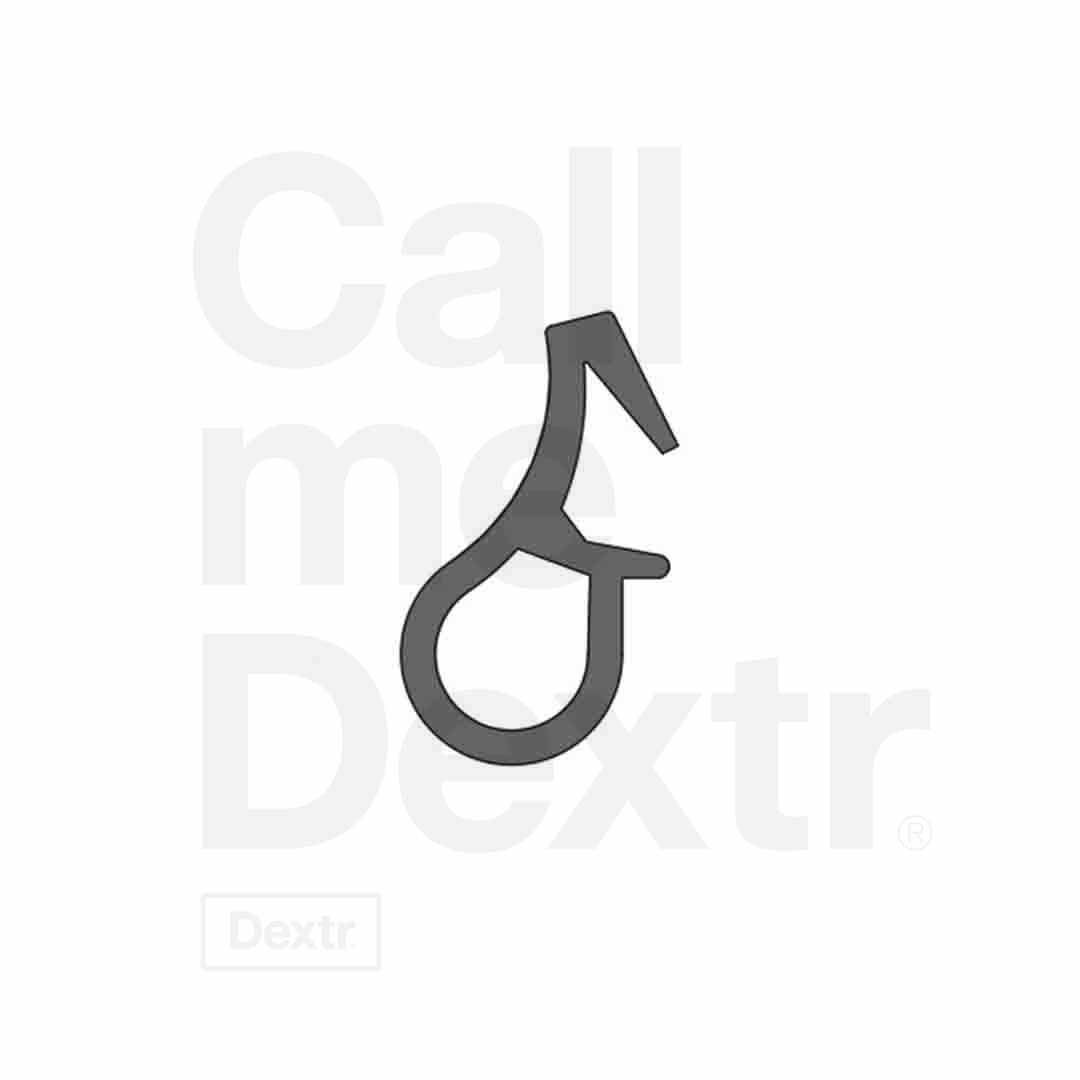
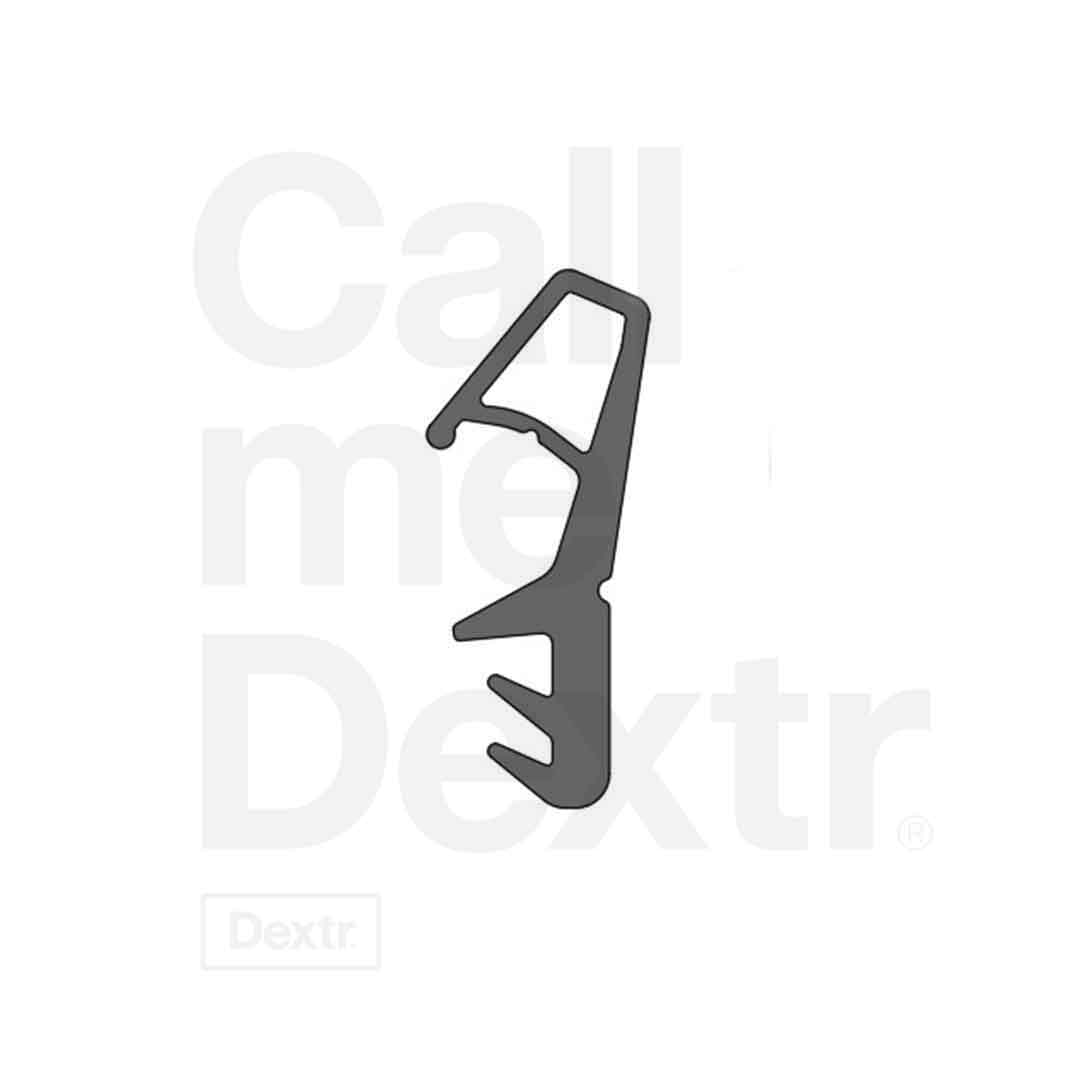
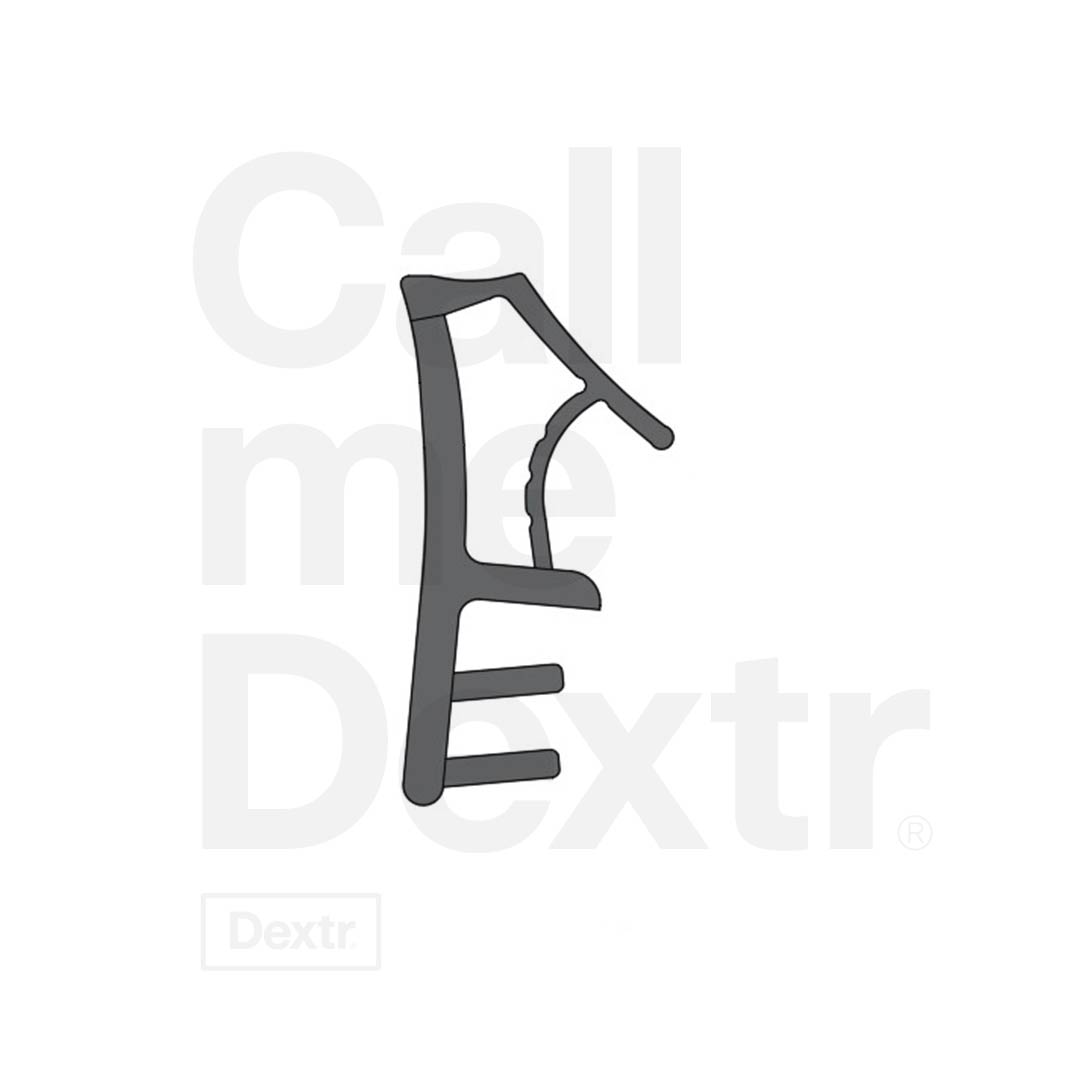
The geometry also determines how a door seal functions. Possible designs include flexible sealing lips, hollow chambers, insertion feet, barbs and multiple contact zones. A hollow chamber can be compressed relatively easily, while a sealing lip provides a flexible contact surface.
Co-extrusion can be used when different sections of a door seal require different properties. During this production process, at least two material streams are combined to form a single profile.
The foot can, for example, be produced from a harder, more dimensionally stable material to ensure that the door seal remains securely positioned in the mounting groove. The sealing section can be made from a softer, more flexible material so that it deforms more easily and makes proper contact when the door is closed.
Co-extrusion allows different hardnesses, colours and functions to be combined in a single profile. This can potentially reduce the need for separate components or additional assembly steps. When three material streams or functional zones are required, tri-extrusion can also be considered.
For applications with specific fire-safety requirements, the use of a flame-retardant material compound can be investigated. The required standard, classification and testing method must be clearly defined beforehand.
A flame-retardant door seal does not automatically make a door construction fire-resistant. Fire resistance must be assessed and certified at the level of the complete door system.
Depending on the material and technical feasibility, door seals can be produced in various colours. In addition to black, white and grey, other colours or transparent versions may also be possible. With co-extrusion, several colours can be combined within the same profile.
Depending on the application, additional finishes can also be considered, such as self-adhesive tape, delivery on rolls or cutting the profiles to a fixed length.
The operating environment determines which design is most suitable. If no suitable rubber door seal or technical sealing profile is available within the standard range, Dextr can develop a custom-made door seal.
We consider, among other factors, the dimensions of the door, frame and mounting groove, the fastening method, the required hardness and the conditions in which the seal will be used. This results in a door seal that meets the technical requirements of the application.
Cannot find a suitable solution? Contact Dextr. Together, we will determine which standard or custom-made door seal is suitable for your application.